 BBC Stocks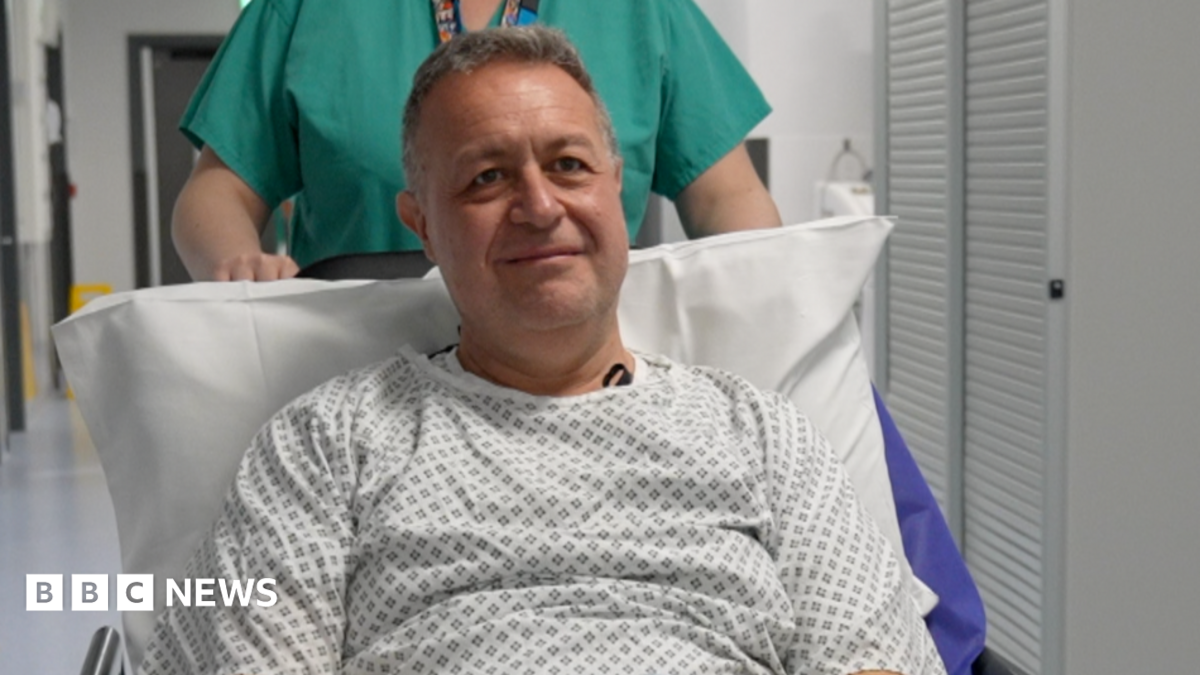
A rapid new test for brain tumours that the NHS has started using can slash the time it takes for an accurate diagnosis from up to eight weeks to two hours. The test, which is used by doctors to diagnose which type of tumour a patient has, should mean patients can start treatment including radiotherapy and chemotherapy sooner, and are spared weeks of uncertainty. Steve Palmer, 55, from Nottingham, is among those to benefit from the new technology - and it meant surgeons were able to get his result while they were still operating to remove his tumour.
"Getting that quick diagnosis removed weeks of anxiety," he told the BBC. NHS England said that the genomic test, which works by quickly analysing the genetic code of a sample of the tumour, will be piloted in specialist centres around England. There are around 150 different types of brain tumour ranging from slow-growing to aggressive cancers, each of which can respond differently to treatment.
Steve was diagnosed with a brain tumour after he collapsed at the gym, and the test revealed it to be a grade 4 glioblastoma. "It wasn't the result I wanted to hear but it means I can get on with the next phase of treatment and recovery, and get on with fighting whatever it is I've got to fight," he told the BBC. Consultant neurosurgeon Stuart Smith, who led Steve's operation at Queens Medical Centre, part of Nottingham University Hospitals NHS Trust, told the BBC the test "seems almost magical." "The diagnosis of brain tumours relies on molecular and genetic analysis but it can take up to six to eight weeks to get the full information back.
Here it is done while we are still operating." Diagnosing the type of tumour while the patient is still on the operating table could impact how surgeons operate. Smith explained: "For some tumour types, which are curable, surgery needs to be as radical as possible to remove every last bit of tumour that we can find. "Other types, sadly, are too aggressive, and beyond what surgery can remove, so we would be more cautious in order to lower the risk of causing damage to the brain." The test works by sending small tissue samples taken from the tumour to the pathology lab.
The samples are prepared for loading into a shoebox-sized sequencing machine made by Oxford Nanopore, which uses specialist software developed at the University of Nottingham, in partnership with hospital clinicians. The molecules of DNA pass through a nanopore - a tiny hole - which reveals the tumour's unique genomic fingerprint. In Steve's case, after the nanopore machine was running for 20 minutes, the neuropathology team called the theatre to tell them that the tumour was likely to be a glioblastoma.
Dr Simon Paine, consultant neuropathologist at Nottingham University Hospitals NHS Trust, explained that the genomic test was transformative in comparison to what he could determine by looking at tumour cells down a microscope. "I'm crystal ball gazing and can do it reasonably well on a good day, but nowhere near with the clarity of the nanopore, which gives a comprehensive molecular classification," he said. More than 12,000 people in the UK are diagnosed with a primary brain tumour each year.
It is the biggest cancer killer of children and adults under 40. Prof Frankie Swords, NHS medical director, said: "For people with suspected brain tumours, getting the right diagnosis quickly can feel like a race against time, while waiting weeks for answers can be agonising for them and their families. "This remarkable rapid test has the potential to completely transform how we diagnose brain tumours, with results reaching patients in a matter of days rather than weeks.
"This is a huge leap forward for patients - a faster diagnosis means they can start the right treatment or access clinical trials sooner, while for some patients it could mean surgeons can make potentially life-changing decisions about their surgery while on the operating table." The NHS England pilot will involve five specialist centres in Nottingham, Birmingham, London and Newcastle - they are Nottingham University Hospitals NHS Trust, University Hospitals Birmingham NHS Foundation Trust, Great Ormond Street Hospital NHS Foundation Trust, King's College Hospital and Newcastle Hospitals NHS Foundation Trust. It will later be extended to sites in Bristol, Oxford, Leeds and Manchester. The pilot builds on an earlier project already under way in Nottingham and Birmingham.
Source: BBC